Journal
Practice & process notes
Occasional writing on my art practice, techniques, process, and the ideas behind the work.
7 articles on Art & Life
July 27, 2026
The Alchemy Of Self: Plein Air Painting In The Mountains Of Colorado
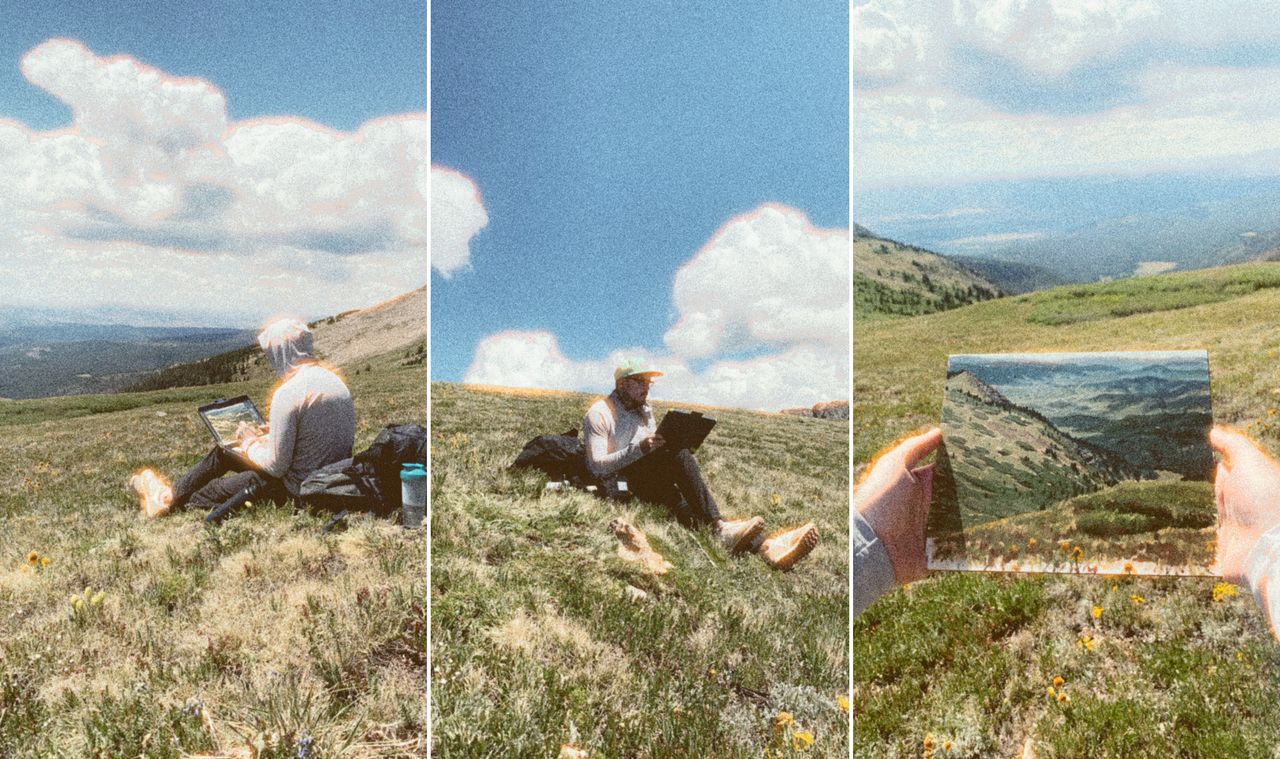
Recently I met up with an old friend in Granby, Colorado and hiked The Devil’s Thumb trail, a 7.5 mile out and back with a 2247 foot climb over rough terrain, at a starting altitude of around 9000 feet. I thought the day would be a fun proof of concept for my DIY plein air painting rig, to prove to myself that it’s a viable setup for a strenuous and difficult hike. What it turned into was the most difficult hike I’ve ever done and a proof of concept for so much more. The altitude, the heat, the weight of the gear, and the sheer elevation gain soon became major factors and about 2/3 up the ascent, in a wildfire scorched swath of dead timber and stifling heat, I was wobbly with fatigue and mentally battling through every second, focusing my entire attention on each movement of my legs, reaching deep for all the meditation techniques I’ve practiced over the years. I had many moments of doubt, some moments of frustration, a few of panic, and eventually a breakthrough of surrender to the goal. My mind became laser focused on a single point: I will not disappoint my friend or myself, I will reach the top and make the painting I planned on. All of reality, all possibilities in the entire universe shrunk down to this one specific, inevitable, unquestionable outcome. This is a conscious nonduality I’ve chased for many years making art—a flow state of pure freedom where the self is lost to the goal, and the art makes itself through the conduit of me. A willing surrender. Having this realization that surrendering my self and all its pointless fears and doubts was actually the only way I was going to reach the summit, was when I felt in stunning realtime clarity the past few years of struggle, depression, grief, and rage become compressed and dissolved by a single breath and step at a time. The future is a fantasy, the past is a memory; only this moment is real. And now this moment. This breath. This foot stepping forward. Now this one. Place foot on rock. Engage glutes, push. Breathe in, drag it deep into diaphragm, exhale slowly. Do it again. Complete this moment, survive to the next moment. After many moments the summit was reached. I laid down in the grass, with a pounding migraine and nausea, and achieved my goal of making a painting. I was too tired to stand and never used my tripod, suddenly useless weight that I had unnecessarily trudged up the mountain. No worries, my rig is still a success, viable in extreme difficulty day hikes. And most importantly, suffering was alchemized into achievement and the limitations of ego and self were transcended. The universe works as designed too. View From Devil's Thumb, oil on panel, 8 x 10 inches, 2026
Read →
October 19, 2023
Notes & Advice 12: Tapping Into The Creative Flow
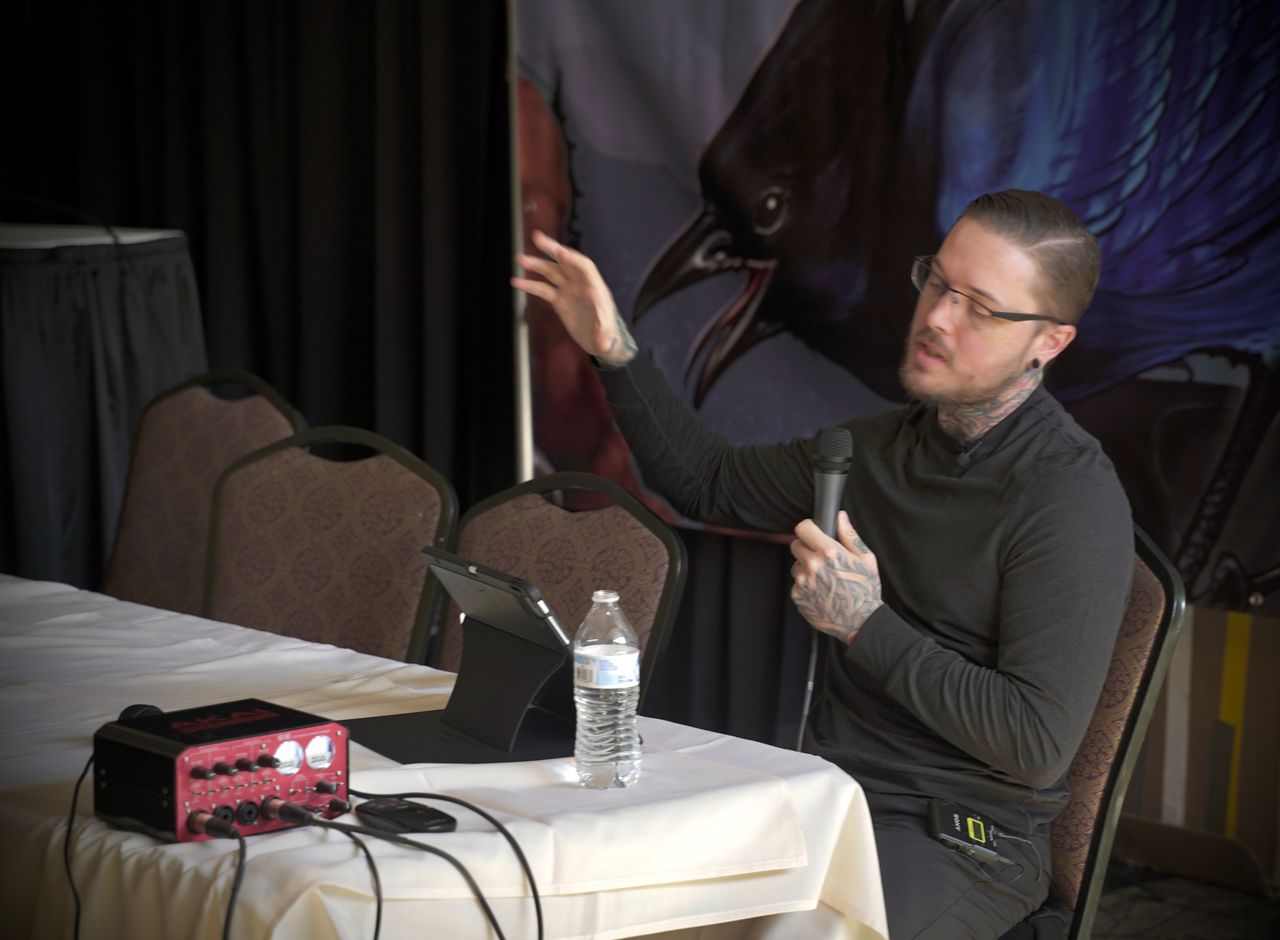
Last week at an educational event for tattooers called the Paradise Tattoo Gathering, I spoke about the flow of creative energy, which is something that all creators and visual artists quite obviously need and depend on. I believe it's a universal force that we can tap into by opening up our awareness and observational skills through artistic training. The act of focusing our minds on practicing a task like life drawing or painting–a task that requires us to continually drop our preconceived notions of reality (ego) and observe with unbiased intensity and clarity–is what opens up the energetic channel within us that receives this universal force. Researchers have called this a "flow state." And for tattooers, drawing/painting/working in other mediums is an incredible way to not only strengthen that artistic flow state but make it easier to access whenever you need it. Excellent, creative, innovative artwork or tattoos don’t happen in a vacuum. This creative energy needs to be allowed into our life/mind by how we're living and being, and then filtered down into our painting or tattooing practice, or whatever artistic medium is at hand. For example, it's very difficult to declare, "I'm going to be creative and come up with a brilliant image or idea, right here and now!" and then just make that happen on command. What is far more realistic or more often the case is that we lose ourselves in the training, in the practice, in the task of learning and developing our skills free from heavy expectations, and in this free and loose state of action or doing, ideas start to occur to us. Iterations and variations on a theme or technique evolve naturally, bringing us to an eventual solution to a visual problem and gifting us the creative ideas or innovations. We get to claim credit for them, and rightfully so as the products of our hard work and dedication, but on a more esoteric level, it's the universal flow of energy (life!) doing us a favor behind the scenes with a wink and a nod. The process described here has been the driving force in my life, and the driving force behind my entire tattoo career. It's something I’ve taught in my “Holistic Approach” tattoo seminar for years, and something I remind myself of constantly in my painting practice as well as tattooing. If you're a tattooer or visual artist searching for your unique, authentic voice or battling the ole artist's block, try thinking about this concept and apply it wherever you can, I think you'll be pleased with the results!
Read →
March 15, 2023
The Three Hands Of God
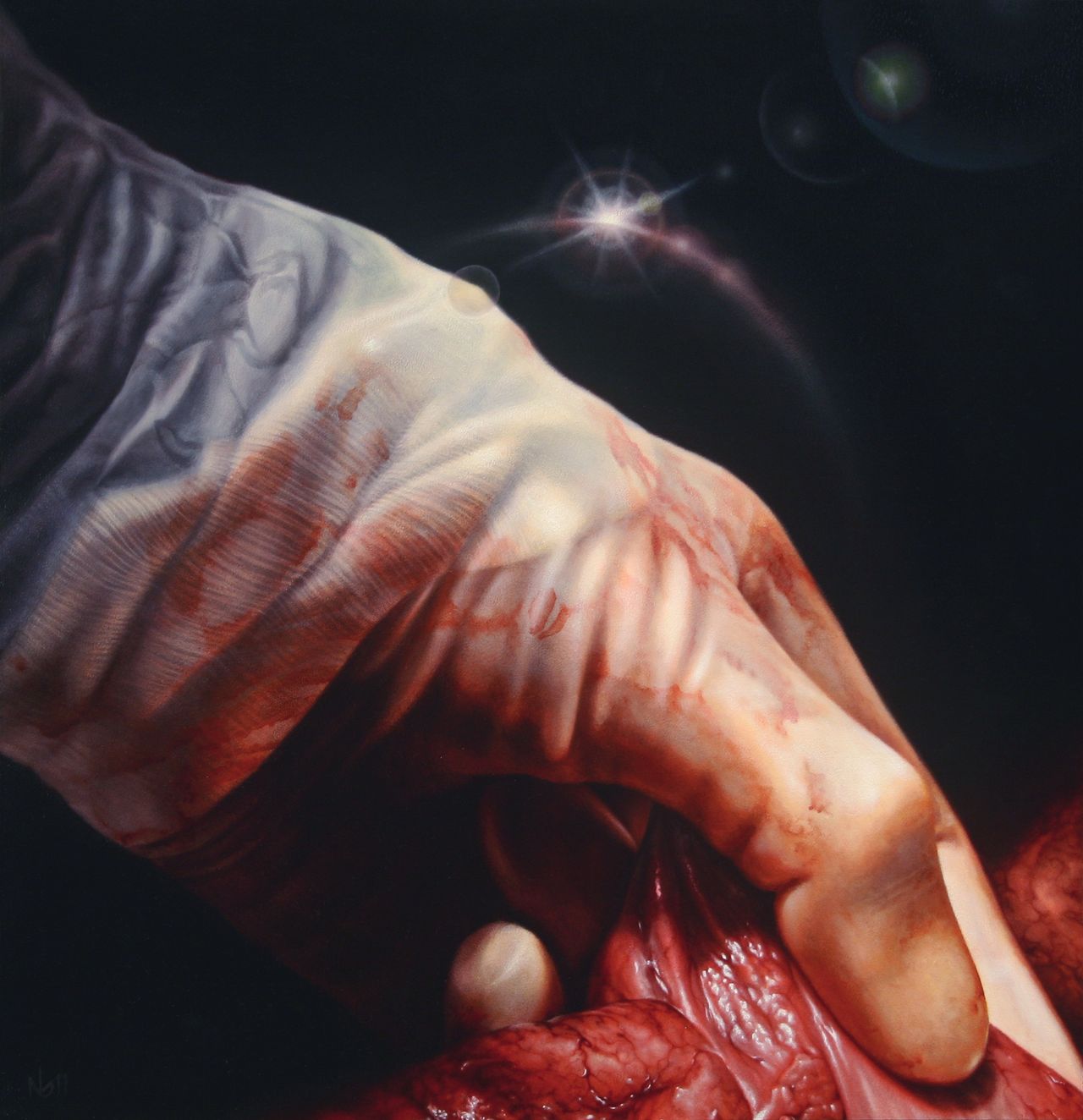
A triptych spanning 12 years and a few different eras of my painting and stylistic evolution, this trio of paintings addresses the tense and often fraught human relationship with power, and in particular the power of forces beyond our control–those within us, in our world, and the cosmos beyond. The concept for the original version occurred to me in 2010 while working on a series of paintings featuring surgical subject matter as a metaphor for the reductionist, manifest destined worldview I saw as predominant in American culture at the time. In this first iteration, the massive hand of the elite neocon / neolib political and cultural caste imposes its will on the flesh of this world. A few years later, in the wake of several natural and man-made disasters in the American Gulf region and beyond, while reckoning personally with the ideas of climate change and ecological destruction I saw as resulting from the worldview described above, I revisited the concept with another surgeon's hand, this time piercing the fragile veil of our atmosphere to wreak its destruction with pinpoint cruelty on the Earth. In this second iteration, the cosmic viewpoint of our planet leaves all of our insignificant and fleeting individual lives too tiny to be depicted or acknowledged. "The operation succeeded, but the patient died." In the decade that passed since that 2013 painting, so much internally and externally had changed, that when the spark of inspiration for this concept struck me again I knew I had to act on it, if for no other reason than to ironically demonstrate that in fact, nothing has actually changed. Our planet is still being destroyed, still largely by our own doing, and those same powerful cultural forces I believe to be the cause of this destruction still exist, perhaps in new forms. The present always suffers the consequences of the mistakes of the past. As if to drive this point home even further, in a regretful twist of life imitating art imitating life, a series of massive earthquakes struck Turkey and Syria at the very time I was painting the rubble of collapsed buildings depicted in the third Hand Of God installment. This poignant connection of symbolism grew more monstrous still, when a train derailment due to greed and negligence caused a toxic chemical spill in Palestine, Ohio at the very time I was painting toxic waste oozing from a broken pipe into a pristine river. At times like these, it seems as though the hand of God might very well indeed be that of a gloved cartoon mouse, amusing itself with sick jokes of frivolous caricatured violence that threaten our very existence. Finding reassurance amidst the destruction we are forced to bear witness to and solace amidst the shattered loves we must endure feels like a Where's Waldo search for our better selves. “The nail that sticks up gets hammered down / the master’s finest, finest tools are found / slack-jawed and placid amidst the cacophony / of screaming billboards and Disney-fied history” —Propagandhi, “Today’s Empires, Tomorrow’s Ashes” As a sensitive and perceptive person, the angst and despair caused by all of this is something I've always wrestled with, and in eras past I took these emotional states out on myself and my closest relationships. But I've slowly learned healthier ways of processing grief while examining my relationship to power and my attempts to control that which I fundamentally cannot. One of these methods is of course, to make paintings about it, to transmute the inner state of grief into an external communication that may draw awareness to the most pressing issues of our time so that we can continue to examine ourselves and course-correct where we're headed. There is a little flame of hope that burns at the heart of all that, and it's a feeling I try to guard fiercely while harnessing its warmth as a positivity that drives me onward, "unburied, death-defying, unbowed."
Read →
July 12, 2021
Art & Life 3: Self Love/Self Harm
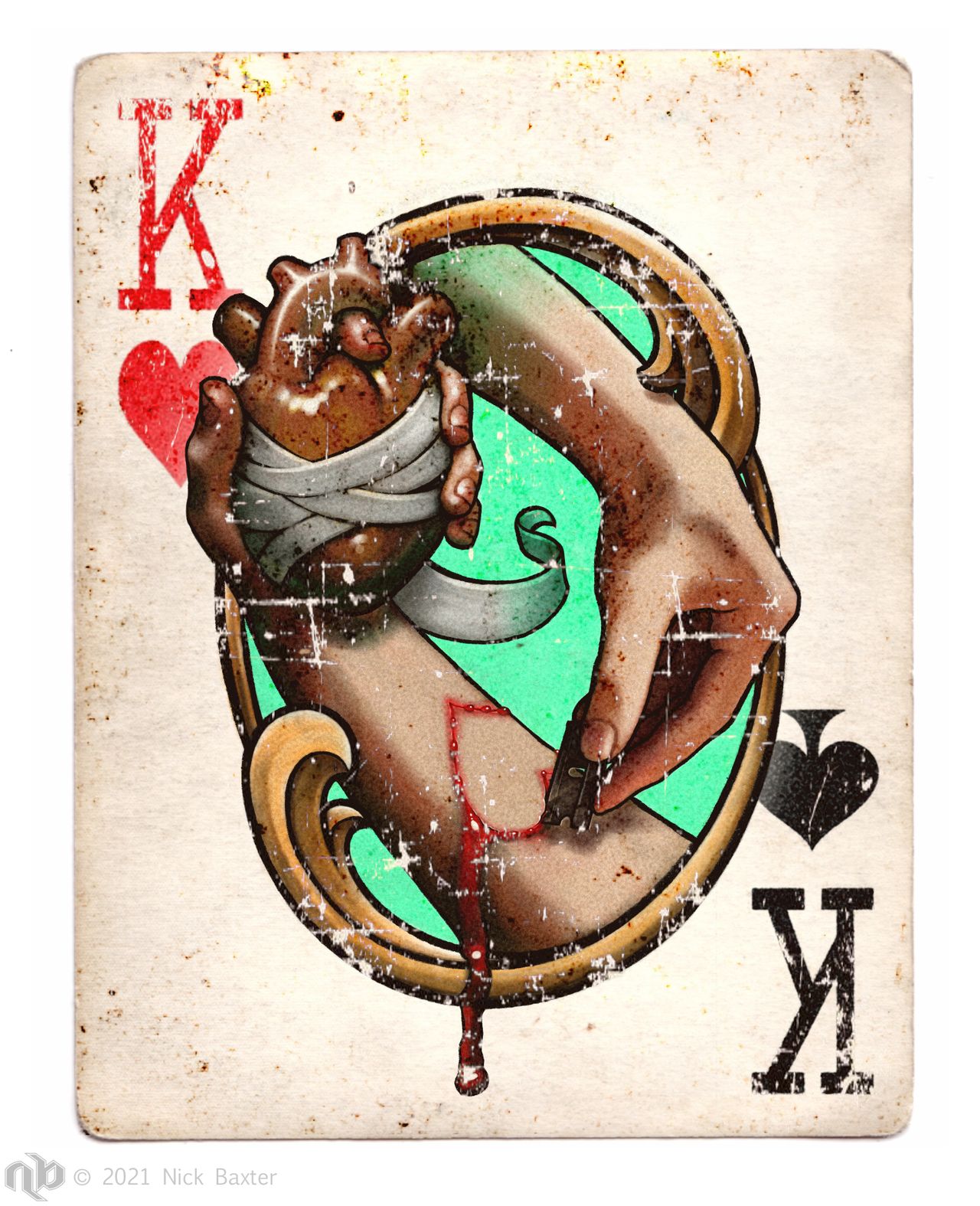
"Self Love/Self Harm", digital (Procreate on Ipad Pro), 2021 Although May every year is mental health awareness month, like many others I believe that every month, week, or day of the year needs to be considered a mental health awareness time. I started thinking about this topic, and then this digital drawing I made a few years ago, when I noticed a grocery store employee recently with some of the thickest self harm scars I’ve ever seen, covering both arms. As someone who’s struggled with self harm at times in life I’d like to think I get it, and I tried to psychically project understanding and compassion. Honestly though I think scars look cool and badass and I’m glad Laura at the grocery store is confident and non-stigmatized enough to rock her personal journey in full view. And anyway my perhaps controversial view on self harm is that it isn’t necessarily all bad in all scenarios—it serves a helpful purpose when other alternatives may not exist or would be even worse, and there’s a real fuzzy line between the accepted forms of self harm in society (tattoos, piercings, getting drunk, etc) and the often stigmatized forms like cutting. Of course context determines a lot, and in a perfect scenario you’d want to avoid emotionally-based self harm ever being an option or an urge, but having personal experience with those mind states, I see it all on a spectrum without judgement. The human mind will find a way to make it through a situation any way it can, and that’s one of our species’ most beautiful attributes. This image was originally posted to my Instagram feed, but was removed for violating community guidelines. Understandably, its content could be a trigger for some, and presumably someone reported it, or the AI censor bots caught it, due to the depiction of blade cutting skin. However, possible triggers aside, the intent of the piece and of the post was only positive, and in evidence of that intent were the half dozen or so heartwarming, inspiring stories of personal strength and perseverance through mental struggles and self-harm that various followers shared in the post comments...moments of beautiful honesty and vulnerability which are sadly now lost forever. Since this image inspired a bunch of people to reach out and share those uplifting anecdotes, I resolved to re-post it here on my own censorship-free blog. I invite any comments or stories related to overcoming mental health struggles or coping with self harm urges. De-stigmatizing difficult topics, facing our triggers in order to work through them, and compassion for self and others are the ways to healing and growth!
Read →
April 30, 2014
What Is Art? (Part 2)
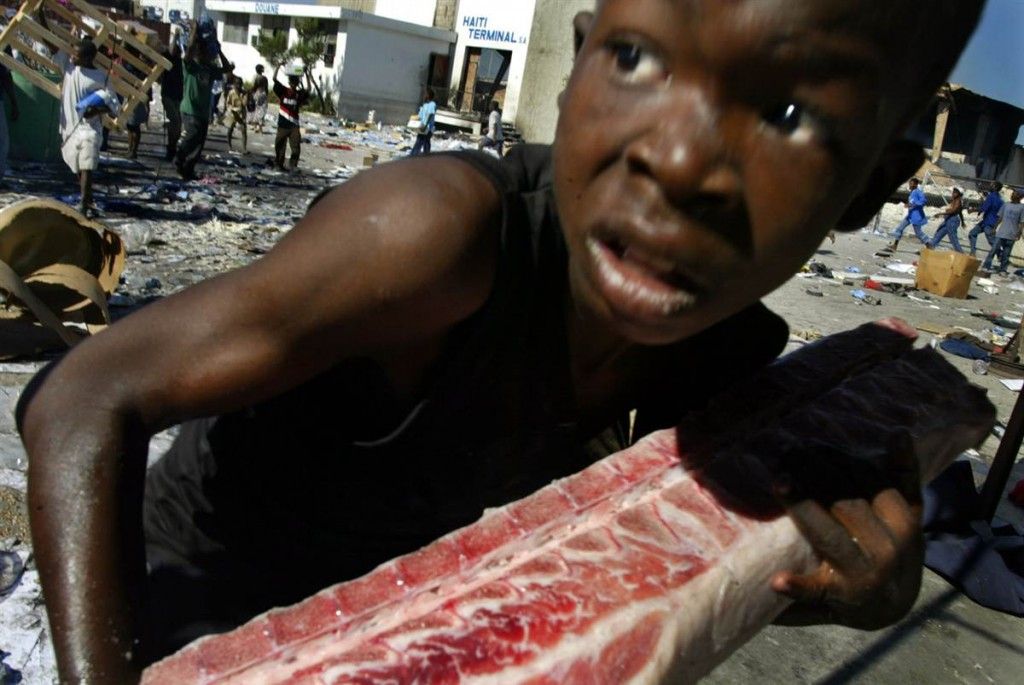
Last year I started collecting my thoughts on the continual debate in my head about what art is, and how it can be (among other things) an effective form of communication. That effort was and still is intertwined with the process of further understanding my own art, and all other art, as well. In hindsight, I thought the initial writing ( here and here ) was a bit unfocused, and since it was also incomplete, I took the time recently to revisit those blog entries and rework them into a more cohesive essay. The final part of that essay, as mentioned in the second of those prior blog posts, is about my belief that photojournalism can be viewed as a creative art form, possessing an almost-accidental form of raw beauty capable of inspiring other works of art (such as many of my own). This critique of photojournalism introduces broader questions about the “unintended” as art, and–for now–completes my investigation into the sneakily complicated debate “What is art?” In the future I’ll post the final version of the essay in its entirety, but for now here is the “part 2” continuation of those prior blog posts. Photojournalism and the Unintended as Art In the last 100 years, photojournalism has become a fixture of our visual landscape. On the surface, it’s simply defined as the use of images to tell a news story or to report on current events. In this role, the photos are not art, and their photographers are not acting as artists, which means their images are typically held to strict ethical standards of honesty, impartiality, and objectivity. But these attributes are graded on a scale that becomes increasingly inexact amidst the complexity of postmodern thought and the digital age of endless reproduction and re-appropriation. This is the point at which the question “What is art?” becomes relevant and fascinating to me, when applied to the medium of photojournalism. I’ve always appreciated the naïve purity of an image that’s been produced with no pretense of art, utterly uninhibited by the finicky shackles of artistic rules or the whims of unreliable muses like inspiration. In this open and wild space, artistic qualities and natural beauty are given the chance to emerge on their own, unintended and raw, like the strongest of weeds in a perfectly manicured lawn, and photography seems to be an ideal medium for this phenomenon. This element of chance can produce quite powerful images, capable of communicating intensely to the viewer while remaining—and precisely because they remain—firmly grounded in the truth of reality “as it happened.” And so the commonplace photos we’re bombarded with through ever-increasing media saturation begin ostensibly as visual data comprised only of ‘facts’ or neutral information, yet end up loaded with symbolism, embedded with the perceptions and beliefs of their creators and audience after becoming the subject of this artistic line of inquiry. One of my all-time favorites (sorry I could not find the photographer or image credit online). In studying art history, it seems this afterlife of the journalistic image became much more possible in the wake of the Dada movement, when artists (including photographers) carved out new niches for their work beyond mere decoration or commemoration of important people or places. Art in the 20th century became increasingly deconstructivist, philosophically charged, and conceptual in nature, filling multiple roles while having its meaning manipulated by the increasingly complex worldviews of both creator and audience1. Because of this evolution, just about anything could be considered art in the right context, meaning that most contemporary art now resides as much in the blurry, ambiguous realm of provocative ideas as it does in the realm of traditional craft. Hence a museum visitor might encounter an exhibit of random paint splotches that, beneath its completely underwhelming, childlike appearance, contains a metaphor referencing complex political or psychological theories learned by the artist through years of intense academic study. This can be maddening to the viewer who simply wants to marvel at a skillfully executed object of beauty, or it can be liberating for those who want to engage in debate, controversy, or social change through the arts. My own art has always attempted to straddle this fence by incorporating the best of both worlds: technical, precise handling of paint in the realism tradition, yet depicting modern subject matter and informed by the angst and alienation of postmodern philosophies. It is my belief that photojournalism in the modern age, thanks to that 20th-century process of expansion and deconstruction, straddles a similar fence, one separating objective observations from subjective beauty and meaning. This ability of the journalistic photograph to transcend genres is confirmed in the academic community by the fact that “Breaking News Photography” is a Pulitzer Prize category. This prestigious yearly award started in 1917 as a way to honor impactful achievements in American journalism, literature, and music. Winning photographs are resurrected as art objects, receiving appreciation for their poignancy and beauty—a second life of sorts, after their initial purpose or function in the journalistic media has been served. This second life also takes the form of photo essays, curated and arranged into cohesive narratives, which are now commonly presented in art and lifestyle publications, fine art galleries, and museums throughout the world. Depending on the intentions of the photographer and exhibiting institution or publication, as well as the sensibilities of the viewing audience, these photographs may be appreciated for their communication about the world events that comprise their content, or for their artistic qualities—or both. In his 1995 essay about the modern age of photojournalism, writer Richard Lacayo wades into the debate surrounding artistic subjectivity and meaning: “Photojournalists tend to stay aloof from talk about camera aesthetics. There is something about dodging gunfire in Beirut that discourages ruminations on style, understandably enough. More to the point, no one who catalogs bloodshed or poverty wants to be thought of as yet another vendor to the senses. Some news photographers spend half their lives chasing wars; who can blame them if they reach for the door when they hear the word art? …The stereotype survives: artists have visions; journalists have assignments. They may both think to themselves, ‘I am a camera,’ but each means something different. “Yet aesthetic questions have a moral dimension. Color is pretty; misery is not. How does one keep the simple appeal of color from confounding the full range of meanings a photograph may convey? If pictures of genocide come to us in the muted pastels of a GAP ad or the vivid hues of a rock video, how does a photographer keep atrocity from looking palatable?”2 While the moralist in me sympathizes with this sentiment, the artist and rebel in me, raised in an age of cynicism, desensitization, and ambiguity, views adjectives like ‘palatable’ as mere subjective opinions, impossible to resolve into an absolute truth for all to agree on. Human culture is so diverse that practically anything could be considered palatable art, by someone. And so I answer Lacayo’s question with another question: “Why should the photographer keep atrocity from looking palatable?” I want to ask this question not because I enjoy atrocity, but because I am capable of the postmodern complexity of holding multiple feelings and competing appreciations within me simultaneously. In this case, that multiplicity includes the horror and revulsion at the tragic events occurring in our world as well as the aesthetic delight at the spectacle of color, shape, line, emotion, symbolism, and meaning on vivid display, emerging somewhat accidentally (and perhaps with more purity) through the photojournalistic medium. As if to concede this very point I’m making and pay homage to the “What is art?” debate, the author goes on to admit, “The most capable photojournalists…have learned to incorporate the unruliness of color into a deliberate statement. …Barbaric rule can operate in the broadest daylight, suffering can happen in sensual settings, a place can be cruel and inviting at the same time.” And so we see that through the inescapable conduit of subjectivity, passive observation becomes intentional communication, and thus, photojournalism can also be the highest of art forms, loaded with inspiration for artists working in any medium. I’ve always appreciated the best journalistic photography for this transcendent ability, the point at which the happenings of this world become awe-inspiring images, and the deepest truths contained in the human condition are put on poetic display. Various newspaper and magazine clippings I’ve saved over the years for reference and inspiration. So once and for all, “What is art?” This question may never be fully answered. But with an integral approach and an open mind, artists and viewers alike can use this line of inquiry to enrich their experience of reality, to deepen the communication that is the purpose of all art, and to find beauty everywhere, even where it may be unintended. Another powerful, poetic image (sorry I couldn’t find the photographer or image credit online for this one either). 1The Situationists of the 1960s took this evolution to the extreme, espousing radical anarchist views on art that embraced destruction and merciless re-appropriation of all imagery, in the service of transforming society and conscious reality into a powerful and playful dialogue with the present moment. 2Lacayo, Richard. “IV: Resurgence 1980-1995.” Eyewitness: 150 Years of Photojournalism. New York CIty: Time, 1995. 166. Print. 2 Comments Notes & Advice 8 | TAM Blog says: June 30, 2014 at 1:06 pm […] And then there’s this insight regarding the public perception of “fine art” and the communicative power, which is a timely reinforcement of some of the conclusions about modern art I described in my “What Is Art?” essay: […] Nick Baxter: Notes and Advice 9 | TAM Blog says: October 29, 2014 at 1:25 pm […] is working with or wishes to communicate through their work (I’ve written a lot about this here and here, with a future post coming as well). This relates to the study of your own mind, to […]
Read →
May 3, 2012
Art & Life 2: Artistic Karma
(The following is an excerpt from a longer text I wrote a few years ago, posted here in order to explain in detail–with helpful hints–the concept of Artistic Karma mentioned in my previous post.) Finishing What You’ve Started: Your “Artistic Karma” One all too common obstacle for artists, especially beginners in a particular medium, is abandoning projects before they’re completed. We’ve all done it from time to time, but some more than others, and it can become a hindrance to our artistic progress. What commonly happens is that the painter’s vision exceeds their technical skills at that time. Whether they’ve set their expectations too high, attempted something too difficult and got stuck with a technique problem they couldn’t solve, or improve so fast that they dislike what they’ve previously done to the piece, the end result is often frustration and discouragement. This type of failure is unnecessary, and it pains me to see talented artists hold themselves back with lack of follow-through. I call this “artistic karma.” Unfinished paintings and abandoned projects accumulate bad artistic karma; they’re like a book with a bunch of incomplete sentences. Imagine trying to read that book and learn something from it—it’d be so much harder with the author withholding all that information from you, just teasing with partial thoughts and no conclusions. With our art, we are that author, and we’re constantly reading our own book—our completed work—in order to learn via hindsight and grow as artists. We need to have finished paintings, no matter how unsatisfactory the end result, to be able to critique (and have others critique), so that the lessons of where we need to improve can fully sink in. Direct experience is the quickest and most profound way to learn something, because we live that lesson firsthand. By abandoning paintings and losing sight of the ultimate goal, one can only learn the artistic lessons of that attempt conceptually, through the incomplete means of “woulda, coulda, shoulda.” The knowledge and insight of where to go next don’t sink in as far this way. The classic example to illustrate my point is the child told not to touch the hot stove who remains skeptical, versus the child who actually touches it and learns the lesson directly and beyond a doubt. So having the discipline, patience, and work ethic to put our minds and abilities to the task of making the best of a painting that we hate, will help us much more in the long run. We can ensure our growth and progression by “finishing the thought,” completing the piece at hand in order to give ourselves a necessary sense of accomplishment and closure, a building block to the next artistic step. By keeping a few concepts in mind, this kind of laziness and resulting discouragement, frustration, and hindrance to progress can be largely avoided. The most important thing to remember is to pace yourself. It’s crucial for your long term success not to take on more than you can handle when just starting out. We all want to paint the next great masterpiece, but we have to remember to be patient—achieving greatness takes time! Learn to set yourself attainable goals for each session, each day, each week, or each painting. Similarly, it’s often wise not to have more than one painting in progress at a time, especially if you’re tattooing full time or have some other kind of day job. After taking care of all the other tasks of your life, you can be more effective with the time and energy you have left if you concentrate more intensely on a single goal rather than spreading yourself too thin. Being able to make changes on the fly during the course of a painting, based on what your progress is presenting to you, is a skill you will develop with experience. Each and every painting is an experiment, even more so as a beginner. Sometimes when things don’t go according to plan it’s necessary to re-evaluate and come up with a new plan, or two. Constant critique combined with a goal-oriented mentality will serve an artist well in addressing problems that arise, and in never giving up. If all else fails and a project becomes too frustrating or bewildering, instead of abandoning it, put it aside temporarily. Do so for a long enough time to get a fresh perspective on what you need to do, but not long enough to lose interest and motivation. For paintings that may take weeks to complete, keeping your momentum is crucial. To ensure this happens, keep it displayed in a place you’ll have to see it every day. Walking by it and glancing at it briefly may yield an unexpected, spontaneous flash of inspiration. Sitting in front of a painting for hours on end, staring at it from up close, and working logically and deliberately the way sharp focus realism often demands, causes our thought process to tighten up and dulls the immediacy of our creative urges and artistic intuition. So it can really help with any piece of art, to literally take a step back, look at it from 5 or 10 feet away, and “see the forest for the trees” once more. Another way to loosen up and regain your focus on “the bigger picture” during this break is to have some fun messing around with a different medium, or just fling some paint around on a different canvas or board and see what happens. “Happy accidents” may occur that give you new insights, ideas, and fresh energy to get back to completing the original task at hand. Although this bit of advice contradicts the “one painting at a time” guideline, it may still be appropriate and productive at times, so use your best judgment. Some people do great with multitasking on several paintings at once, while others get hopelessly distracted and might maintain their focus better with the other suggestions. What often works for me during a longer painting session, is to take a break to do something active like a short bike ride, walk, basketball in the driveway, or something similar. This brief activity releases endorphins, shakes out the tension from sitting or standing still for hours, clears my mind, and allows me to come back to painting with a fresh focus. At this time I often re-critique the piece and figure out whether to stick to my original plan for the session or layer of paint, or make some adjustments and set a new goal. It’s worth repeating that you need to be self-motivated in order to succeed in the arts, and of course with demanding mediums such as painting realism. If you’re not capable of being your own drill sergeant at times then all of these tips for sticking with a painting will be for naught. Having a community of artists you’re involved in helps with this, but sometimes you just have to push yourself if you want to have any hope of being an artist whose work really stands out.
Read →
March 5, 2012
Art & Life: 12 suggestions for breaking through artist’s block
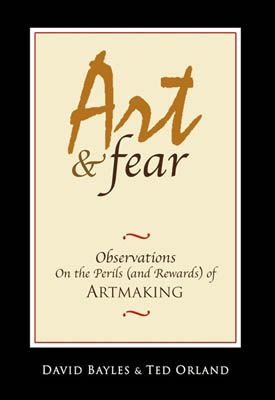
Artistic blocks and dry spells are a phenomenon that nearly every artist expereinces at one time or another in life. A recent email from an artist friend of mine inspired me to compile a list of suggestions, based on my own experiences, for getting past personal hurdles and into the studio to create anew. 1. Read more classical literature, or fiction in general. Creativity in writing–describing imagery and emotion through the written word–translates very nicely to mental images and from there, into visual artwork. Well-written books contain beautiful creativity with language and often deal with inspiring ideas and themes. 2. Read the book “Art & Fear” by David Bayles and Ted Orland. It’s basically a big career peptalk from artists who know what the struggles of creating are like. I found it very inspiring and encouraging, and then went out and produced my “Rebuilding” series after reading it. 3. Go to more gallery openings and art museums. Even just a quick stroll through a museum can be enough to fill your head with fresh imagery or new ideas, or artists to research further and thus get inspired. 4. Seek out artists you look up to or admire and try reaching out to them via email or other means. If they’re willing, pick their brain, ask their advice. 5. Draw from life! All that’s needed are graphite, paper, and an object or figure placed in front of you. Take all the pressure of creativity and concept out of the equation by simply drawing what you see, accurately, efficiently, like recording data, with no importance placed on the final outcome. Set a time limit if needed. And keep it as simple as possible so that in no more than 5 minutes you can be set up and already drawing. Let your mind go while you simply record visual information. It will jog your “muscle memory” and your artistic instincts will activate after a while, once the creative pump has been primed by the physical act of mark-making. 6. Do “loosening up” exercises like painting or drawing with your canvas or composition upside down, working in 2-value light/dark only, setting a time limit to force yourself into instinctual decisions and spontaneity, fingerpainting or splatter painting or palette-knife painting, etc. Put no emphasis on the quality of the final product, simply get into the act of carefree, unhindered, un-self-conscious mark-making. Through this, various exploratory avenues may likely suggest themselves through ‘happy accidents.’ 7. Take an art class, even if it’s something you’re already familiar with. Surrender yourself to the teacher’s process and instruction just for the sake of loosening the restrictive frustrations you’re under, giving yourself the positive experience of ‘a fresh start.’ 8. Simplify your life—maybe you’re taking on too many burdens or unsatisfying and daunting life projects, leaving no energy left over for other needs and desires, like making art and expressing yourself. For many people, a complicated or overdramatic social life can take over. Not to mention vices such as intoxication or substance abuse. Learn to set boundaries and achieve balance. 9. Visit another artist’s studio and watch them work. Imagine yourself in their place, picture yourself solving the visual problems they’re currently working with in their piece. This can jumpstart your creative and productive mindset. 10. Experiment with a meditation practice, such as mindfulness of breathing or more inquiry-based methods like Vipassana. Taking the time to clear your mind or simply look deeply into the thoughts that arise can lead to valuable insights or momentary glimpses into fascinating subconscious realms lurking just below the surface of mundane or stress-based thought patterns. 11. Keep a dream journal next to your bed so that it’s easy to write descriptions of the bizarre worlds and situations you encounter in your sleep, immediately upon waking. The free-formed, non-linear nature of the dream state is fertile ground for unique and highly personal creative ideas and symbolism. 12. Travel. Simply put, going somewhere–anywhere–that is outside of your daily routine or environment stimulates the mind and the senses like nothing else. New experiences in different places force us to activate the creative and problem-solving areas of our brains, making the sights, tastes, and smells incredibly poignant to our previously under-stimulated minds. This often translates into powerful impressions, memories, ideas, and inspiration.
Read →