Journal
Practice & process notes
Occasional writing on my art practice, techniques, process, and the ideas behind the work.
13 articles on travel
July 27, 2026
The Alchemy Of Self: Plein Air Painting In The Mountains Of Colorado
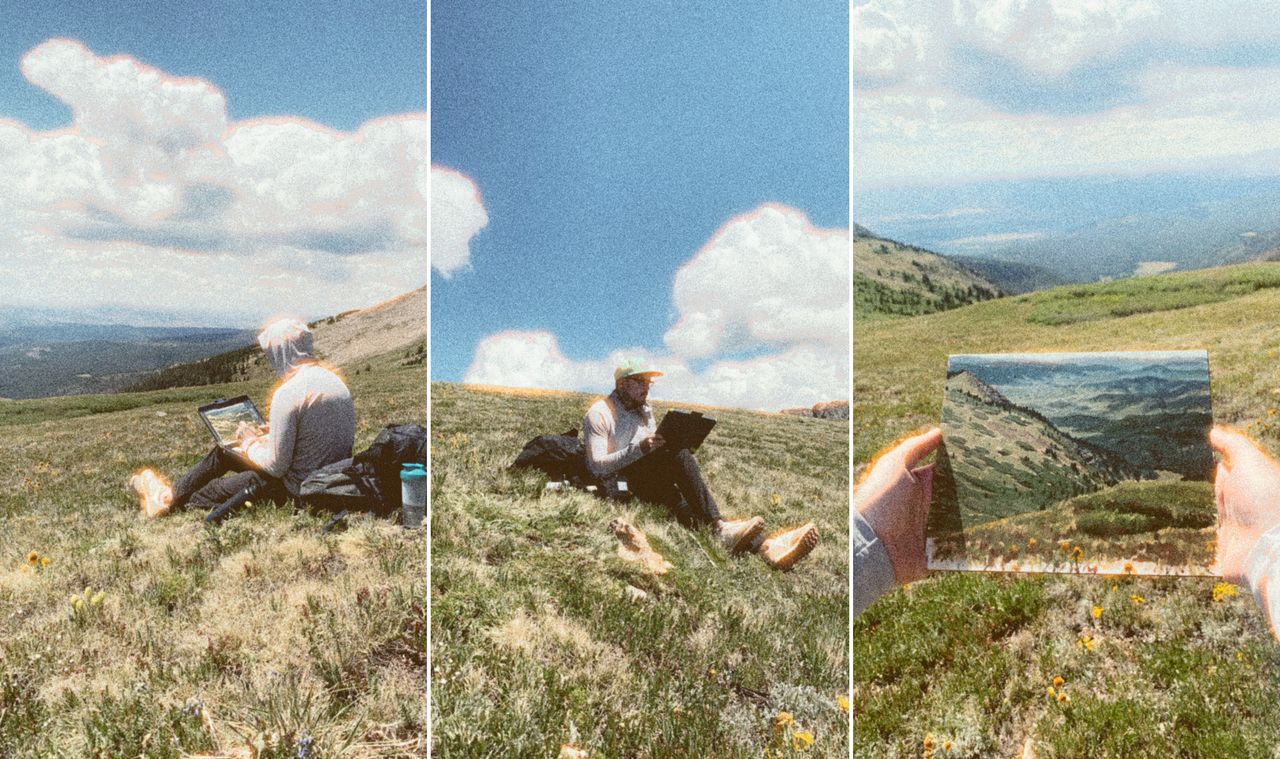
Recently I met up with an old friend in Granby, Colorado and hiked The Devil’s Thumb trail, a 7.5 mile out and back with a 2247 foot climb over rough terrain, at a starting altitude of around 9000 feet. I thought the day would be a fun proof of concept for my DIY plein air painting rig, to prove to myself that it’s a viable setup for a strenuous and difficult hike. What it turned into was the most difficult hike I’ve ever done and a proof of concept for so much more. The altitude, the heat, the weight of the gear, and the sheer elevation gain soon became major factors and about 2/3 up the ascent, in a wildfire scorched swath of dead timber and stifling heat, I was wobbly with fatigue and mentally battling through every second, focusing my entire attention on each movement of my legs, reaching deep for all the meditation techniques I’ve practiced over the years. I had many moments of doubt, some moments of frustration, a few of panic, and eventually a breakthrough of surrender to the goal. My mind became laser focused on a single point: I will not disappoint my friend or myself, I will reach the top and make the painting I planned on. All of reality, all possibilities in the entire universe shrunk down to this one specific, inevitable, unquestionable outcome. This is a conscious nonduality I’ve chased for many years making art—a flow state of pure freedom where the self is lost to the goal, and the art makes itself through the conduit of me. A willing surrender. Having this realization that surrendering my self and all its pointless fears and doubts was actually the only way I was going to reach the summit, was when I felt in stunning realtime clarity the past few years of struggle, depression, grief, and rage become compressed and dissolved by a single breath and step at a time. The future is a fantasy, the past is a memory; only this moment is real. And now this moment. This breath. This foot stepping forward. Now this one. Place foot on rock. Engage glutes, push. Breathe in, drag it deep into diaphragm, exhale slowly. Do it again. Complete this moment, survive to the next moment. After many moments the summit was reached. I laid down in the grass, with a pounding migraine and nausea, and achieved my goal of making a painting. I was too tired to stand and never used my tripod, suddenly useless weight that I had unnecessarily trudged up the mountain. No worries, my rig is still a success, viable in extreme difficulty day hikes. And most importantly, suffering was alchemized into achievement and the limitations of ego and self were transcended. The universe works as designed too. View From Devil's Thumb, oil on panel, 8 x 10 inches, 2026
Read →
November 8, 2023
Then, And Now (Part 5)
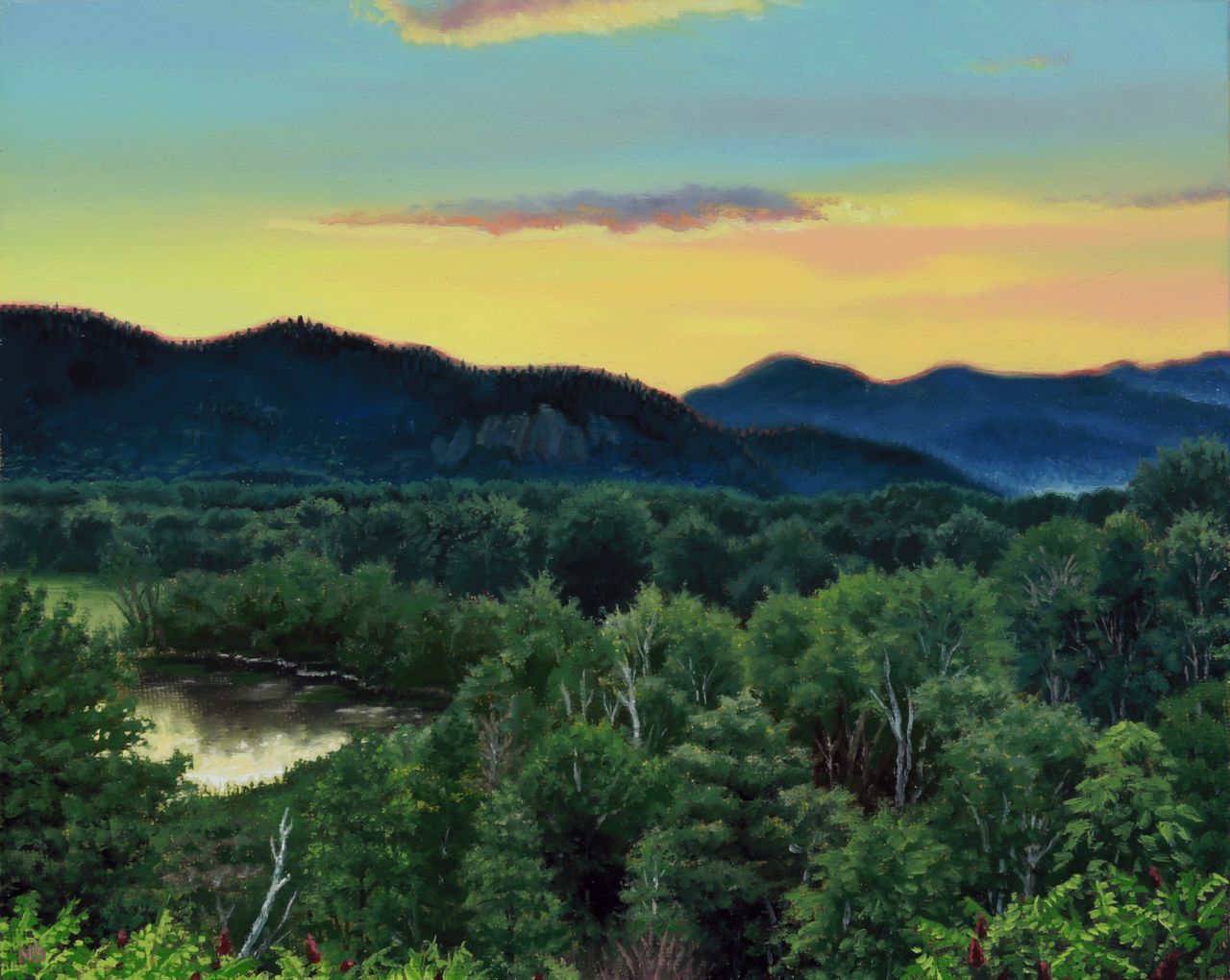
"Then, And Now" or "Then & Now" in the blog search feature, is an ongoing occasional series where themes of progression, time, and memory are explored. "White Mountains Sunset" / Oil on Canvas Panel / 8 x 10 inches / 2023 This painting has an interesting backstory, starting in 2015 when I took an amazing plein air landscape painting workshop in New Hampshire from Thomas Kegler, offered through the Grand Central Atelier. I was brand new to the genre of landscape after having done still life painting for years, and on this evening a sunset painting meetup with renowned landscape painter Erik Koeppel and others was scheduled, which would be my first time ever attempting the extreme challenge of capturing a live sunset in paint. I was thrilled to be painting alongside these legends of the genre and did my best to soak up any knowledge I could while absolutely speed-panic painting my way through a much too short sunset. It was a memorable experience for me and the artistic result was far less important than the practice and mental impressions made. "White Mountains Sunset" / Oil on Canvas Panel / 8 x 10 inches / 2015 As such, I was never happy with the results of my painting and it sat on my studio drying rack since that trip, offering a great memory and calling out faintly to be resolved into a product I can be more happy with. As fate would have it, and I won’t attempt to even speculate why, these past few months was when the random spark of an idea and inspiration finally came to me after 8 years, and I knew it was time to rework this thing. I focused on accuracy this time around, as it had been so long that I was resigned to using photo references from that evening rather than relying on memory, and I always hated how inaccurate the mountains turned out the first time. The rest of the original study was encouragingly accurate to the hazy color diffusion of those moments and the rest of the spatial proportions. I regret losing that hazy pastel color chord in my reworking, which ended up being based on a later stage of the sunset when the forest and mountains had become much darker and cooler, no longer bathed in amber glow. But despite changing its palette and color harmony, I believe it to be a better painting now overall, and feel a sense of closure that this at least won’t be haunting me from the studio wall anymore. Side note: improvement is guaranteed if you just show up and put in the time and effort consistently! So if you’ve been grinding, don’t be afraid to revisit old work when the time finally feels right. Finishing paintings, no matter how long after the fact, allows an artist to learn more lessons and ultimately improve more than abandoning unfinished projects for good.
Read →
February 3, 2022
Perception Of Being: NFT Redux
The Origin Story and The Epilogue Sometime around 2013, during a tattooing trip to South America, I was led into the Amazon rainforest looking for adventure and healing. A shaman there told me I needed to heal my heart. Simple and obvious advice, but the source of that advice and its context gave it weight that haunted me at times. By the end of that year the healer’s directive had fully settled into my subconscious—as the urge finally struck me to manifest his teaching through the transformative power of art. So I painted heart after heart throughout most of 2014. Simple and direct images from simple and direct advice, meant for contemplation and meditative introspection. You, the viewer, get to decide precisely what each representation of the heart means to you, just as I once did. And hopefully they inspire healing in you just as they did for me. 2021 With the rise in popularity of NFTs and the revolution in content creation they’re fostering, it was time to revisit and resurrect this almost forgotten project with fresh inspiration. After the past few difficult years for humanity, a new focus on a healing of the heart may be just what’s needed for all of us to regain a sense of connection and face the ongoing challenges of our time. In this spirit, the 4 new hearts being added to this series all portray the process of finding what’s precious within a damaged exterior, hardened by life’s trials. Hearts breaking open, but in the process, revealing what is true and valuable in each of us. 2022 POB NFTs drop on Opensea starting 2/14. Sign up for my newsletter on this site to stay informed, or visit the project's discord server or Instagram for info: @blockxhouse
Read →
September 15, 2015
On The Road 10: Peruvian Plein Air
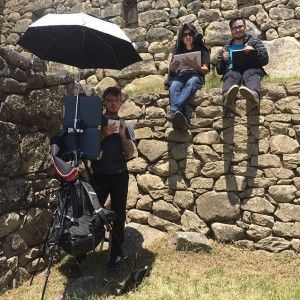
Earlier this month I traveled to Peru, where I trekked to majestic Machu Picchu for the first time, documenting the epic Andes landscape throughout the journey with some plein air studies. Being new to plein air painting, I took a few months before the trip to dial in my portable painting setup, experimenting with different materials and products in order to arrive at something as travel-friendly as possible. Thumbnail sketching with my South American friends on Machu Picchu. Not only did everything need to clear foreign and domestic customs, the intense hiking aspect of the forthcoming journey required it to be as small, lightweight, and efficient as possible. After getting the initial inspiration from my summer workshop teacher Thomas Kegler ‘s novel and ingenious modifications to the traditional plein air pochade box, I searched the internet and local stores for a few more ideas and products. In the end I devised something very functional, fairly efficient, not terribly expensive (as far as high-end art and travel equipment goes), acceptably small, and certainly lightweight. NOTEWORTHY GEAR Tripod: The most important part of a plein air easel is the tripod, and to get one that is (1) reliable, (2) sturdy, (3) small, and (4) lightweight, you have to spend some money. It’s not worth the headaches later on, out in the field, to mess around with the cheap stuff. So I read reviews online and settled on the Manfrotto Befree, which seemed to intersect all of the 4 criteria above at an optimal place. After buying the tripod, I modified it by drilling a hole through the center stem a few milimeters from the bottom, in order to be able to hang a weight (my backpack) from it while working outdoors, which is crucial for keeping the very lightweight tripod sturdy in any kind of wind. So far it’s working out great, I just wish it went just a few inches higher like their studio tripods do, but, you can’t have it all when you’re concerned about size and packing space. (Grade: A). Pochade Box: Ethically, I strongly dislike Walmart, but when it’s the only large store in your small Texas town, sometimes you go there for the one random thing you want that they have (and comfort yourself afterwards by remembering that the entire world is headed for doomsday anyway because of capitalist greed causing global warming, and your minuscule nonsupport of Walmart wouldn’t do shit to stop that, really). In this case, it was the unlikely and unexpected score of a lightweight, plastic, 3-part folding notebook holder thing (with perfectly placed interior velcro elastic straps?!). For around $10.00, and requiring only a few small tripod-mounting holes to be drilled into it, this was an absolute bargain. …and wait, that’s not all!! It’s perfectly sized to fit two 9 x 12 inch panels in such a way that it doubles as your take-home wet painting carrier when you’re done with your session!! Call now, and this product can be yours for only 4 easy payments of literally $2.99!! Seriously though, I’m so pumped about this thing that I want to make an infomercial about it to spread the word. (Grade: A) Paint Carrier: Just a small bait holder from the hunting and fishing section at…Walmart. Or probably most hardware stores. It worked well enough, but I’m still on the hunt for one of equally small size, but with an airtight seal and divided into cubes instead of just rows. The paint mixed together somewhat during transport and higher temperatures, and began to dry out as well due to airflow (a rag soaked with moisture-enhancing Clove oil placed into the container drastically delayed drying time, though). Customs/TSA ProTip: If asked to explain what your oil paint is, never say they are paint! Always refer to them as “artist colors”! “Paint” tends to get lumped in with the general category of industrial, toxic materials banned for civilian flight, and they try to take those away from you, or at least tend to give you a hard time about it. Flying with as few “artist colors” as possible, and always packing them deep in your checked baggage rather than carry-ons, will also minimize hassles. (Grade: C+) Umbrella: At first these seem frilly and wasteful but after a few nasty plein air session sunburns, you realize how crucial they are when you’re standing still in any kind of direct sunlight for any length of time. I’ve been happy so far with my very first umbrella purchase, the Multi Mount Collapsible Umbrella from Guerilla Painter. It packs very small, and doesn’t weigh much. I wish the fabric wasn’t black though, because that can make your workspace very dark. And I also wish the mounting clamp had more angle options but that might be wishful thinking given its price range, size and weight. (Grade: A-) Crucial Miscellaneous Supplies: (1) Cheap zippered cloth bags from Walmart for carrying whatever. (2) Tiny bungee cords from the local hardware store. I use the Cords to keep my pochade box setup sturdy and still–just hook them anywhere, to anything, for some instant tension. These things have been really handy, and surprisingly one of the most indispensable things I bought for the setup. (3) Large industrial rubber bands, also surprisingly useful, in this case for making sure the pochade box doesn’t come unlatched unexpectedly and spring open, and ditto for the paint carrier. (4) Tiny glass vial for carrying solvent. Juuust big enough to hold enough solvent to dip your brush into and sort of clean them after you’re done, until you can give them a thorough cleaning at home. Carrying solvent around really sucks, it’s the worst part of plein air oil painting for me. It’s a health and safety hazard, of course, and not healthy for the environment that you’re trying so hard to appreciate. So, “as little as possible” has been my goal ever since beginning oil painting, and certainly since starting my plein air journey. Customs/TSA ProTip: Because I am a bad person, I have forgotten about and accidentally flown with this single tiny vial containing a mere several drops of solvent, buried deep in my checked baggage, a few times before. Obviously doing this isn’t advisable, and obviously I procure solvent at my destination whenever feasible, and properly dispose of it there as well. So my tip is to scout out in advance where you can get mineral spirits at your destination, and always keep it to an absolute minimum quantity. While on the go, wrap the jar or vial thoroughly with plastic and then double-bag it with ziplocs or anything else you can think of. (Grade: A-) Backpack: I’ve been so happy with my Osprey Comet 30L over the past few years of heavy, rugged use. It’s comfortable, durable, has enough pockets and compartments for everything I tend to carry, and is also Camelbak compatible, which came in handy during this trip, because carrying separate water containers is a drag. I was able to stuff my 2.0 liter reservoir into my backpack along with every single other supply needed, including energy bars, and the whole pack wasn’t unbearably heavy. It was certainly doable over short periods for someone of average to slightly above average fitness range (and not to mention at an elevation of, in this case, 6000-10,000 feet). So as for my portable painting setup criteria mentioned earlier, here’s how I rate my current setup overall: Functionality: A Efficiency: B+ Cost: A- Size: A- Weight A- Being new to the plein air community, I’m sure there’s further improvements to the system I can make and of course, much more experience and knowledge to be gained, but this recent journey was successful enough that I wanted to share and add to the body of helpful knowledge out there. As for the experience and the work itself, here are some photos. Three location shots: First stop in Cusco, Peru: 2 hour sunset study. Second stop in Ollantaytambo, Peru: 2 hour sunset study. Third stop, Machu Picchu, Peru: 4 hour study. Three finished studies, 9 x 12 inches each, oil on panel: “Above Cusco” “Ollantaytambo Sunset” “Huayna Picchu” And some iPhone 5s photography shot throughout the trip, for good measure:
Read →
June 28, 2015
On The Road 9: Detroit
Detroit is a city where the environment itself takes center stage and needs no actors, a scene and setting so ghostly unnerving that one seemingly enters a land outside of time, a post-apocalyptic playground frozen in charred stillness, awaiting future inhabitants. It is a beautiful and frightening place, and in the tension between curiosity and revulsion I found untold artistic inspiration. A part of me needs to experience places like this in order to feel alive, to feel the sinewy tautness of real human struggle against all odds, against seemingly crushing decay and despair. The people I met there and the others I learned about during my stay all love their home through the good and the bad, and that was enough to convince me of another form of unlikely beauty that exists in Detroit. Thank you to all of them and to the interesting, dynamic city that inspired these photos.
Read →
May 1, 2013
Shenpa (Towards Healing)
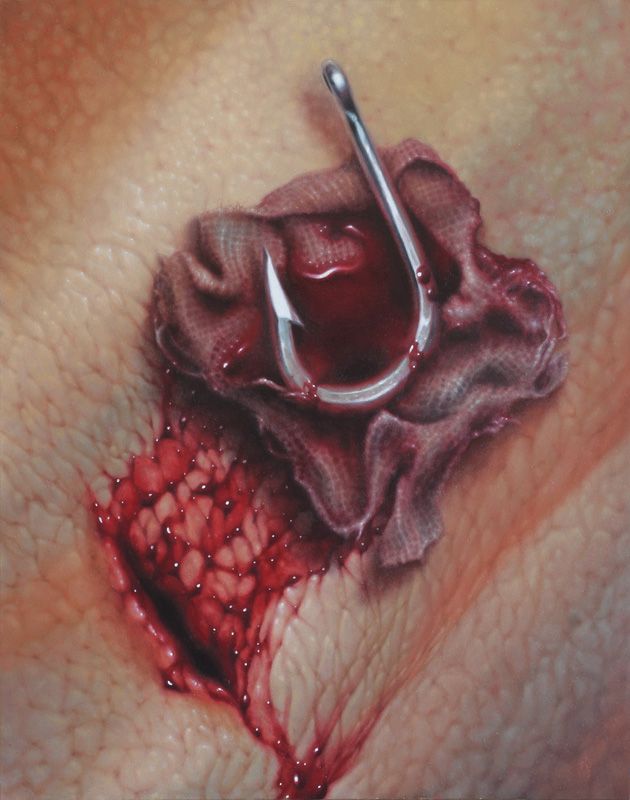
My newest completed painting originated out of the photo shoots I conducted for my 2010 series Rebuilding. The image of extracted hook with bloody gauze rag was leftover reference from that time, a powerful symbol I had always wanted to paint but ran out of time before the exhibition was to occur at Last Rites Gallery in February of 2010. Searching for an idea to paint before embarking on a recent trip to New Mexico, I came across this reference photo and decided the time was finally right to complete the artistic thought. New Mexico feels like a healing place to me; its nickname “the land of enchantment” rings true in the way my mind and emotions feel whenever I visit. Happily, it turned out to be the perfect place to manifest this painting based on an ancient Tibetan teaching related to emotional and spiritual healing (especially having the good fortune of working on it while staying in my dream home! ). One of my favorite writers Pema Chodron has studied this teaching extensively, offering a very clear modern interpretation: The usual translation of the word shenpa is attachment. If you were to look it up in a Tibetan dictionary, you would find that the definition was attachment. But the word “attachment” absolutely doesn’t get at what it is. Dzigar Kongtrul said not to use that translation because it’s incomplete, and it doesn’t touch the magnitude of shenpa and the effect that it has on us. If I were translating shenpa it would be very hard to find a word, but I’m going to give you a few. One word might be hooked. How we get hooked. Here is an everyday example of shenpa. Somebody says a mean word to you and then something in you tightens— that’s the shenpa. Then it starts to spiral into low self-esteem, or blaming them, or anger at them, denigrating yourself. And maybe if you have strong addictions, you just go right for your addiction to cover over the bad feeling that arose when that person said that mean word to you. This is a mean word that gets you, hooks you. Another mean word may not affect you but we’re talking about where it touches that sore place— that’s a shenpa. Someone criticizes you—they criticize your work, they criticize your appearance, they criticize your child— and, shenpa: almost co-arising. That’s why I think this shenpa is really such a helpful teaching. It’s the tightening, it’s the urge… it’s this drive, too. This drive. It really shows you that you have lots of addictions, that we all have addictions. There’s this background static of slight unease, or maybe fidgetiness, or restlessness, or boredom. And so, we begin to use things to try to get some kind of relief from that unease. Something like food, or alcohol, or drugs, or sex, or working, or shopping, or whatever we do, which, perhaps in moderation would be very delightful—like eating, enjoying your food. In fact, in moderation there’s this deep appreciation of the taste, of the good fortune to have this in your life. But these things become imbued with an addictive quality because we empower them with the idea that they will bring us comfort. They will remove this unease. We never get at the root…. The root in this case is that we have to really experience unease. We have to experience the itch. We have to experience the shenpa and then not act it out. [Chodron, Pema. “The Shenpa Syndrome: Learning To Stay.” Shambhala.org. Shambhala International, Sept. 2002. Web. 1 May 2013.] Shenpa (Towards Healing), oil on panel, 11 x 14 in, 2013 Shenpa (Towards Healing), detail I managed to photograph the major developmental stages, though not always in the best light while traveling. Painting in the inspirational interior of an Earthship. One Comment Shenpa II | TAM Blog says: February 12, 2014 at 3:06 pm […] I wrote about the Tibetan Buddhist symbolism surrounding my use of the hook symbol last year, after completing Shenpa I (which now resides in the collection of the amazing and prolific figurative painter Shawn Barber!). […]
Read →
March 7, 2013
On The Road 5.5
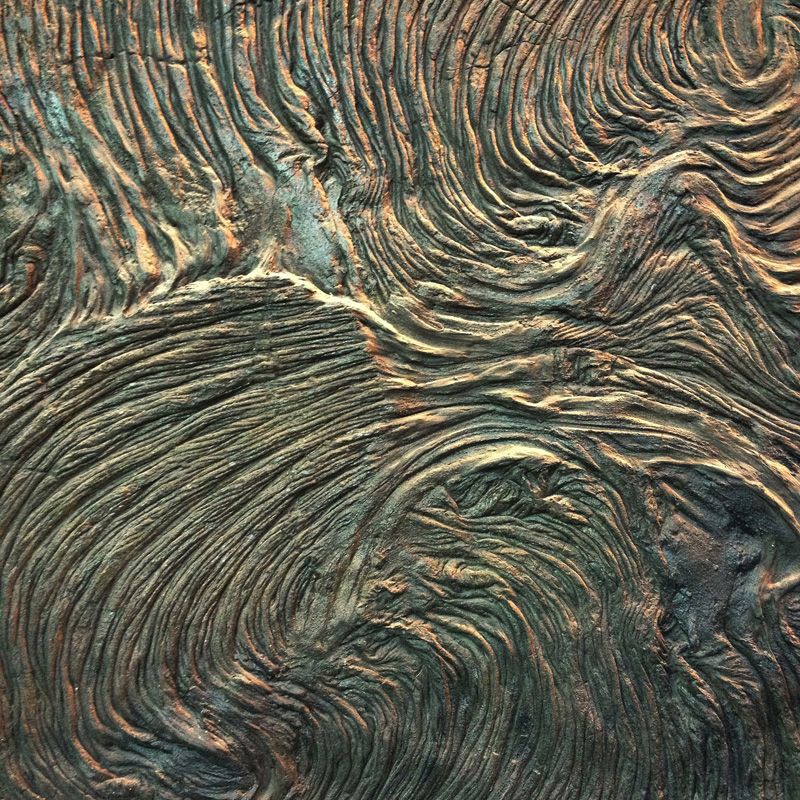
Adventure photos from my recent trek across the great Pacific. All images created with my iPhone 4s. I ( Hawai’i ) II ( New Zealand )
Read →
March 2, 2013
On The Road 5
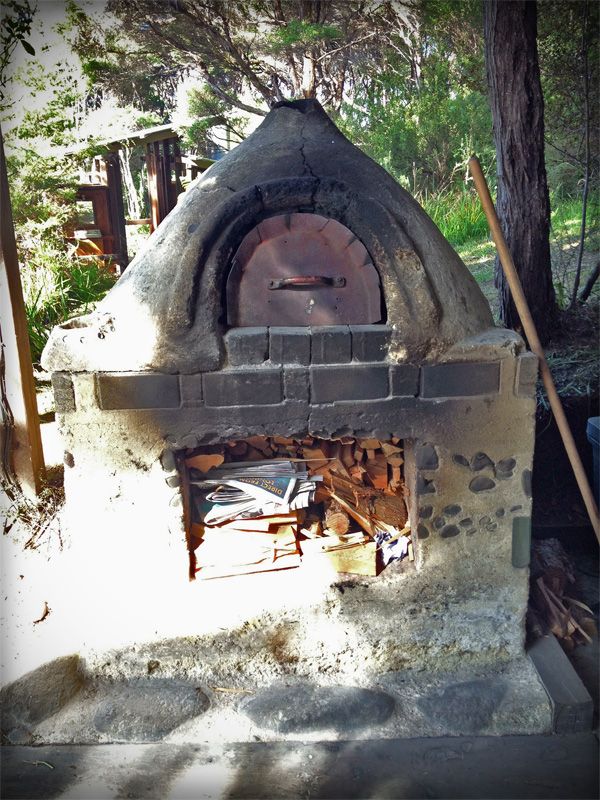
On a recent adventure in New Zealand I had the good fortune of staying at Solscape Eco Retreat in the hills above Raglan, overlooking the Tasman Sea. This popular backpacker’s destination is an ongoing permaculture experiment offering visitors an inspiring vision of off-the-grid, sustainable living in a totally immersive natural setting. Adjacent to a solar-powered, spring water-fed outdoor kitchen sat an apparently well-loved wood-fired earth oven, constructed by hand from salvaged and recycled materials. This crown jewel of primitive outdoor cooking was a welcome source of heat on the few cool nights spent there–to say nothing of the enticing smells of slow roasted food which kept me hovering curiously nearby during mealtimes. Going through studio withdrawals, I decided to commemorate the sacred vessel of sustenance with an impromptu 30-minute life study using whatever materials were on hand: generic white printer paper and a mismatched palette of Copic markers. Earth Oven (study), marker on paper, 8.5 x 11in, 2013
Read →
November 13, 2012
On The Road 4
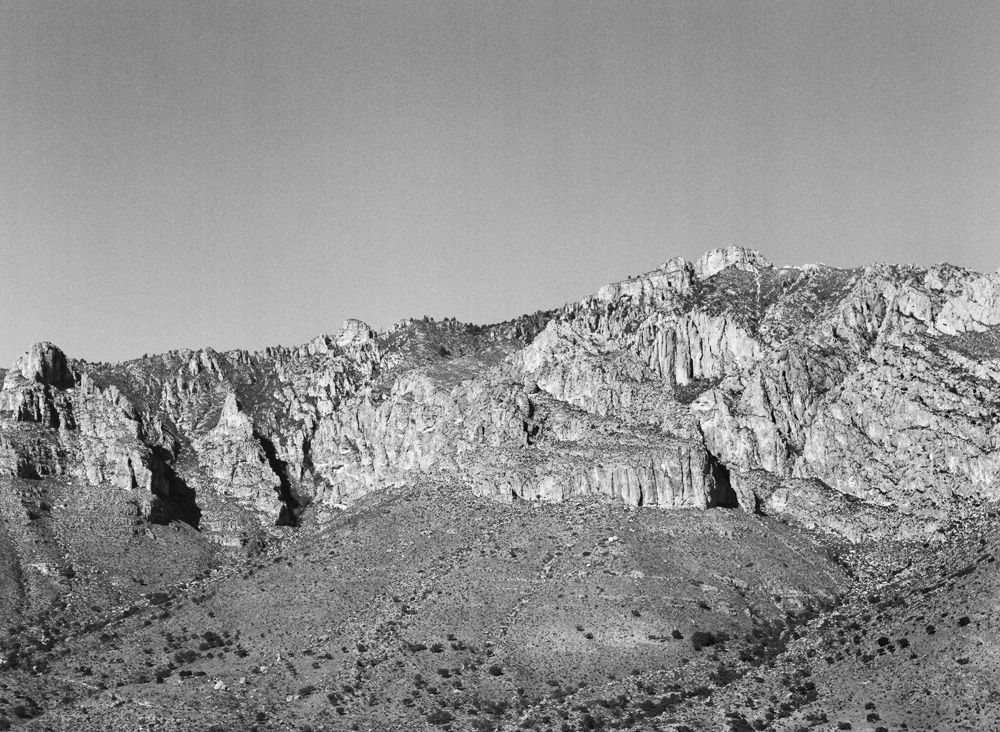
A few weeks ago I spent two quick but relaxing days in the Middle Of Nowhere, rediscovering my medium format camera with some long-expired film, then hoped and prayed for some advantageous developing defects (which can be unpredictable on old color film). Lacking traditional darkroom access and skill, I get high resolution scans of my negatives, and do all editing in the “digital darkroom” with Photoshop CS4. For the non-purist photographer, this mixed-media, mixed-era process creates a satisfying blend of traditional and modern aesthetics, while exponentially increasing one’s creative options. Guadalupe Mountains, West Texas (Mamiya 645E medium format with 80mm f/2.8 on Kodak Plus X-Pan Pro 125. Negative scan to digital, Photoshop) Marfa, Texas (Mamiya 645E medium format with 80mm f/2.8 on Kodak Portra 400UC. Negative scan to digital, Photoshop)
Read →
September 5, 2012
Wildlife In the Post-Natural Age
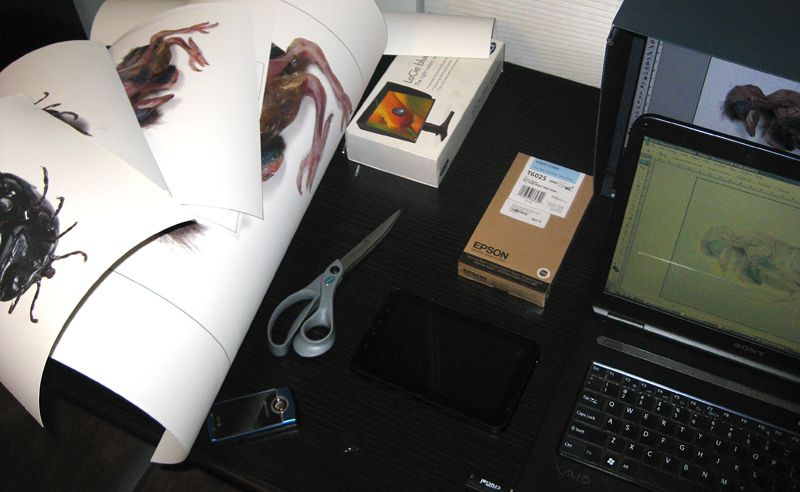
I have two recent photographs included in a group show this month at the Williamsburg Art & Historical Center in Brooklyn, NYC, called Wildlife in the Post-Natural Age. This thoughtful and gorgeous collection of work, featuring several renowned contemporary artists (who I’m humbled to be showing alongside), was curated by my talented friend Cara DeAngelis. If you’re in the Northeast and have any interest in wildlife, ecology, or environmentalism, this show is worth checking out. Cara’s eloquent press release describes the concept that inspired the exhibit: “The show focuses on work that addresses the interplay between wildlife and our domesticated selves and spaces. It probes the persistence of wildlife in American culture and individual imagination through the work of a diverse group of city-based artists. The varied works evoke a reconsideration of the term ‘wild’ in what Gary Snyder has called a Post-Natural Age, and the role that artists are playing in exploring these issues.” The photos I submitted for the exhibition are from an ongoing series of macro studio photography I’ve been working on for approximately 2 years now. These digital images are a scientific document of the myriad lifeforms I discover or interact with in my travels and adventures on Planet Earth. This project was partly inspired by the Terry Gilliam version of 12 Monkeys, a surreal post-apocolyptic harbinger, which took hold of my teenage brain and hasn’t ever truly let go. The photos below reveal some of the process of preparing my prints for display, followed by the original digital versions of the images featured in the show. Stay tuned for more images from the series, which has a working title of Specimens. At Jeff’s house proofing the images. Taking an image from digital to print for the first time is tricky–this was an all-day affair. A print emerging from Jeff’s monster EPSON 5million (ok, thats not a real model number. But it’s huge). The reds in this image proved incredibly difficult to dial in. Back at the studio with all my proofs. Hand-painting, signing, and numbering each one to make a little series of prints I can sell. No sense in throwing away all these proofs that were nearly indistinguishable from the final full-sized print. Hand painting some effects on the full-sized prints that will be mounted and sent to the exhibition. Mounted up and varnished, drying. Detail of some of my paint/re-touching effects. “Frailty (Grackle, Austin, Texas)”, photo/digital, 2011 “Gluttony (Engorged Wood Tick, Turtle Mountain Indian Reservation, North Dakota)”, photo/digital, 2010
Read →
August 23, 2012
On The Road 2
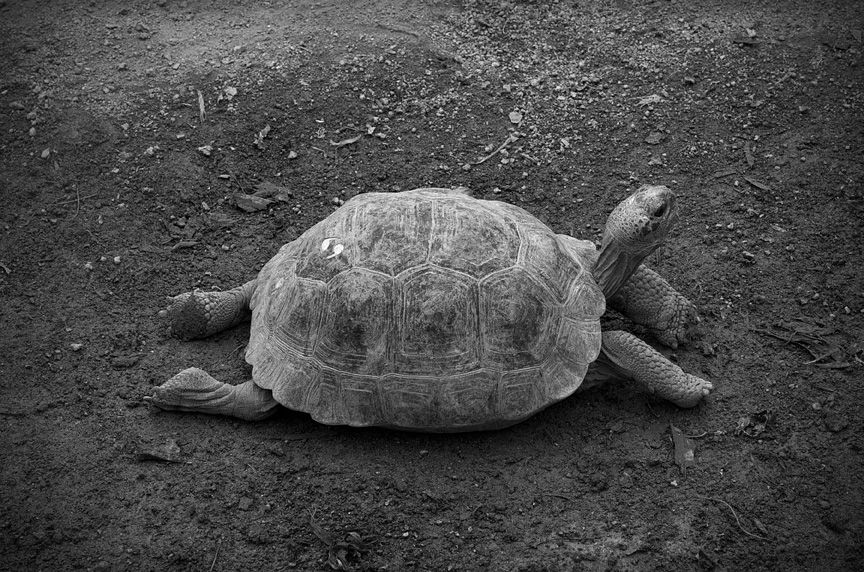
I (Canon EOS 30D, with 100mm f/2.8 macro & 50mm f/1.8 standard Photoshop) II (Canon EOS 30D with Sigma 17-70mm F2.8-4 DC macro OS HSM, Canon PowerShot SD1100 IS, Photoshop)
Read →
March 5, 2012
Art & Life: 12 suggestions for breaking through artist’s block
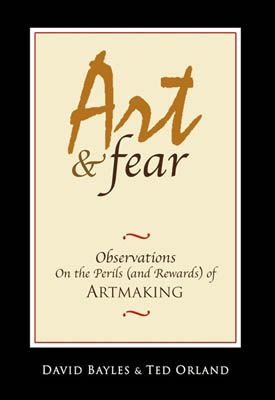
Artistic blocks and dry spells are a phenomenon that nearly every artist expereinces at one time or another in life. A recent email from an artist friend of mine inspired me to compile a list of suggestions, based on my own experiences, for getting past personal hurdles and into the studio to create anew. 1. Read more classical literature, or fiction in general. Creativity in writing–describing imagery and emotion through the written word–translates very nicely to mental images and from there, into visual artwork. Well-written books contain beautiful creativity with language and often deal with inspiring ideas and themes. 2. Read the book “Art & Fear” by David Bayles and Ted Orland. It’s basically a big career peptalk from artists who know what the struggles of creating are like. I found it very inspiring and encouraging, and then went out and produced my “Rebuilding” series after reading it. 3. Go to more gallery openings and art museums. Even just a quick stroll through a museum can be enough to fill your head with fresh imagery or new ideas, or artists to research further and thus get inspired. 4. Seek out artists you look up to or admire and try reaching out to them via email or other means. If they’re willing, pick their brain, ask their advice. 5. Draw from life! All that’s needed are graphite, paper, and an object or figure placed in front of you. Take all the pressure of creativity and concept out of the equation by simply drawing what you see, accurately, efficiently, like recording data, with no importance placed on the final outcome. Set a time limit if needed. And keep it as simple as possible so that in no more than 5 minutes you can be set up and already drawing. Let your mind go while you simply record visual information. It will jog your “muscle memory” and your artistic instincts will activate after a while, once the creative pump has been primed by the physical act of mark-making. 6. Do “loosening up” exercises like painting or drawing with your canvas or composition upside down, working in 2-value light/dark only, setting a time limit to force yourself into instinctual decisions and spontaneity, fingerpainting or splatter painting or palette-knife painting, etc. Put no emphasis on the quality of the final product, simply get into the act of carefree, unhindered, un-self-conscious mark-making. Through this, various exploratory avenues may likely suggest themselves through ‘happy accidents.’ 7. Take an art class, even if it’s something you’re already familiar with. Surrender yourself to the teacher’s process and instruction just for the sake of loosening the restrictive frustrations you’re under, giving yourself the positive experience of ‘a fresh start.’ 8. Simplify your life—maybe you’re taking on too many burdens or unsatisfying and daunting life projects, leaving no energy left over for other needs and desires, like making art and expressing yourself. For many people, a complicated or overdramatic social life can take over. Not to mention vices such as intoxication or substance abuse. Learn to set boundaries and achieve balance. 9. Visit another artist’s studio and watch them work. Imagine yourself in their place, picture yourself solving the visual problems they’re currently working with in their piece. This can jumpstart your creative and productive mindset. 10. Experiment with a meditation practice, such as mindfulness of breathing or more inquiry-based methods like Vipassana. Taking the time to clear your mind or simply look deeply into the thoughts that arise can lead to valuable insights or momentary glimpses into fascinating subconscious realms lurking just below the surface of mundane or stress-based thought patterns. 11. Keep a dream journal next to your bed so that it’s easy to write descriptions of the bizarre worlds and situations you encounter in your sleep, immediately upon waking. The free-formed, non-linear nature of the dream state is fertile ground for unique and highly personal creative ideas and symbolism. 12. Travel. Simply put, going somewhere–anywhere–that is outside of your daily routine or environment stimulates the mind and the senses like nothing else. New experiences in different places force us to activate the creative and problem-solving areas of our brains, making the sights, tastes, and smells incredibly poignant to our previously under-stimulated minds. This often translates into powerful impressions, memories, ideas, and inspiration.
Read →
January 10, 2012
On The Road
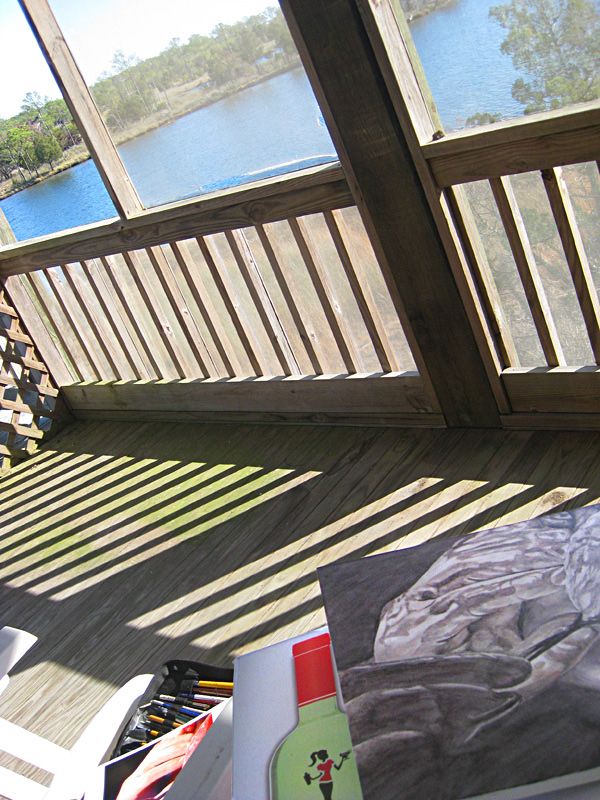
“ Live without dead time!” One of the slogans, courtesy of the Situationists, that I try to live by. To me it means making productive, efficient, and enjoyable use of one’s short time on this earth. I find it easy to embody this ethic at home in the familiar environment of the studio, where steady progress is made on paintings and other projects. But it can be tough to halt progress and pull away in order to travel, and even tougher to get back into that same productive, creative sweet spot after returning. One solution to this interruption is to bring the studio with me, if I suspect I’ll have some free time during my trip. I’ve developed a system that helps me fit all my painting necessities inside a cloth-bound, folding brush and paint holder that’s approximately the size of a thick 3-ring binder. This makes it easy to travel with art supplies and be ready to work wherever I may be. My most crucial travel items consist of: approx 10 small tubes of paint approx 30 brushes small vial of Alkyd medium small vial for OMS collapsible mahlstick small rag I usually stick to smaller sized paintings while traveling, to make packing and transport easier. To save space in my bag, I wrap my painting panel with my packed clothing, for padding and protection. Sometimes a simple tripod-style collapsible easel is necessary, but often enough my destination has adequate desks or other furniture to take advantage of and provide a makeshift studio setup. I make sure to work with quick-drying mediums while on the road, so that my painting will be dry enough to pack again into my luggage, after working on it the day before departure. Painting at my parents' house: mid-afternoon, overlooking the water.
Read →